ICSE Schools in India: A Parent’s 2026 Guide to Choosing the Right School (Without Getting Lost in Rankings)
Choosing among ICSE Schools in India can feel like researching a “brand” rather than a school—because the board is only one part of what actually shapes your child’s learning, confidence, and outcomes. Parents usually start with a simple query (“Which ICSE school is best?”), but quickly end up with harder questions: How rigorous is ICSE really? Will my child cope? What matters more—board, teaching, or peer group? And how do I shortlist fairly without falling for marketing?
This guide is written for Indian parents doing serious admissions research in 2026—especially if you’re comparing ICSE with CBSE/IGCSE/IB, trying to decode “top school” lists, or planning a move between cities.
Mini Table of Contents (for busy parents)
- What is ICSE and why do parents choose it?
- How many ICSE schools are there—and why do numbers differ?
- Is ICSE harder than CBSE? (Workload, skills, and assessment reality)
- ICSE vs CBSE vs IGCSE vs IB: which fits which child?
- What makes a school “top” for ICSE—beyond rankings?
- How to shortlist in your city: a practical parent framework
- Admissions in 2026: documents, timelines, interviews, red flags
- Fees and “value”: how to compare without guesswork
- Common parent scenarios (transfers, languages, special needs, stress)
- Where EuroSchool fits in an ICSE shortlist
- FAQs parents ask most
1) What exactly is ICSE—and what does “ICSE school” mean in practice?
ICSE is the Class 10 examination system conducted by the Council for the Indian School Certificate Examinations (CISCE); many schools that offer ICSE for Class 10 also offer ISC (Class 12), but not all.
What parents often misunderstand
- “ICSE school” is not one single teaching style. Two ICSE schools can look completely different day-to-day depending on leadership, teacher quality, and how learning is assessed.
- Affiliation matters more than claims. A genuine ICSE school is CISCE-affiliated and will appear in CISCE’s official school locator.
- English-medium is typical. CISCE describes its exams as conducted through the medium of English.
Why parents choose ICSE (when it works well)
ICSE tends to appeal to families who want:
- strong English language foundations (reading, writing, structured expression)
- a broader subject approach in the middle years
- skill-building through projects, internal assessments, and application-based learning (implementation varies by school)
Choose ICSE for the learning approach you want, not because “ICSE is best.” Your shortlist should start with school quality indicators, then confirm board fit.
2) How many ICSE schools in India—and why do different sources give different numbers?
There isn’t one single public number that perfectly answers “how many icse schools in india” because counts vary by what’s being counted (ICSE-only vs ICSE+ISC, India-only vs India+overseas, active vs historical entries). CISCE’s public messaging notes “over 2,600 schools in India and abroad” are affiliated.
A practical way to understand the numbers
- CISCE affiliation includes schools offering ICSE and/or ISC (and sometimes other CISCE programmes).
- The CISCE School Locator database shows 3,254 entries in its directory interface (as displayed in the tool).
- Some websites quote different totals because they:
- combine ICSE + ISC and label it “ICSE schools”
- include overseas CISCE schools
- double-count schools listed under multiple categories or older affiliations
What parents should do instead of chasing a perfect number
If your goal is admissions, the only “count” that matters is:
Are there enough credible options in your city that match your child’s needs and your family’s logistics? Use the official locator to validate affiliation, then shortlist based on fit.
3) Is ICSE harder than CBSE? What “rigour” actually feels like at home
ICSE can feel more demanding for some children because of language load, breadth of content, and the expectation of expression, but “harder” depends more on the school’s teaching approach and your child’s learning profile than on the board name.
What rigour looks like in real life: Parents usually experience rigour in three ways:
1) Volume vs depth
- Some ICSE schools cover more reading and writing across subjects.
- The best ICSE classrooms don’t “add content”; they strengthen concept clarity + expression.
If your child is bright but slower at writing, ask schools how they support writing stamina without creating stress.
2) Expression skills (especially English)
ICSE often rewards:
- structured answers
- explanations and examples
- clearer written communication
Ask for 2–3 anonymised student samples (mid-level, not toppers) to see what “good answers” look like.
3) Assessment style is changing (competency emphasis)
Boards across India are moving toward competency-based assessment; CISCE has also been publicly linked in media reports to increasing competency-based question patterns and evolving policies. Don’t ask only “board results.” Ask: How does the school build application skills from Grade 4 onwards so Grade 9–10 doesn’t become panic time? Your child’s experience of “difficulty” is mostly driven by teaching design, feedback quality, and study habits—not the board label.
4) ICSE vs CBSE vs IGCSE vs IB: which fits which child?
Board fit is best decided by your child’s learning style, your family’s mobility plans, and your definition of success (marks, skills, global readiness, balance).
Quick comparison table (parent-friendly)
Factor parents care about | ICSE (CISCE) | CBSE | IGCSE | IB |
Strength in language & expression | Often strong | Varies by school | Strong | Very strong |
Breadth of subjects | Broad | Structured | Broad & flexible | Conceptual & interdisciplinary |
Transfer ease within India | Good in metros | Very high | Moderate | Moderate |
Global recognition | Good | Good | High | Very high |
Workload perception | Moderate–high (varies) | Moderate | Moderate | High (varies) |
If you may relocate across India in 2–3 years, don’t pick a board in isolation—pick a school group/system that supports transfer continuity. Board choice is a tool. School quality is the engine.
5) “Top ICSE schools” — what makes a school truly strong (without relying on online ranking lists)?
Many parents search top icse schools in india and get lists that look confident but hide their scoring method. Some lists are based on votes, some on reviews, some on fees, and many are essentially directories.
A better definition of “top” (parent-tested): A genuinely strong ICSE school is usually consistent in these six areas:
1) Teaching quality you can observe
Look for:
- lesson structure (clear objective → practice → feedback)
- student talk time (children explain, not just teachers)
- respectful classroom culture
Ask to observe a real class, not only “demo day.”
2) Assessment that builds skill, not fear
Ask:
- How often do students get descriptive feedback (not just marks)?
- How are weak fundamentals supported early?
Strong schools intervene by Grade 3–5, not in Grade 9.
3) Literacy culture (the silent differentiator)
Good ICSE outcomes often correlate with:
- real libraries
- reading routines
- writing across subjects (science/social science too)
Ask for the school’s reading program details—not just “we have a library.”
4) Maths and science conceptual strength
In strong schools:
- problem-solving is taught explicitly
- mistakes are treated as learning data
Ask what proportion of classroom time is spent on application vs copying.
5) Child wellbeing + academic ambition coexist
Top schools manage:
- homework load by grade
- sleep-friendly routines
- exam preparation without daily panic
Ask for a weekly homework policy by grade.
6) Parent communication that is specific
Strong schools give:
- clear rubrics
- learning updates
- actionable next steps
If the school’s communication is vague during admissions, it rarely becomes clearer later.
6) How to shortlist ICSE schools in your city without getting overwhelmed
Shortlisting works best when you use a 2-stage filter: first eliminate non-fit options fast, then compare the remaining schools deeply.
Stage 1: Fast elimination filters (30 minutes per school): Use these questions:
- Is the school genuinely CISCE-affiliated?
Check the official CISCE locator. - Is the daily commute realistic for 3–5 years?
A “great” school becomes a bad experience if your child spends 2–3 hours daily in traffic. - Does the school’s teaching philosophy match your child?
Ask: “How do you support different learners in the same class?” - Is the learning environment calm and purposeful?
Observe transitions, noise levels, teacher-student interactions.
Stage 2: Deep comparison (your shortlist of 3–5 schools): Create a simple parent scorecard. Example:
Dimension | What to look for | Your notes |
Classroom quality | engagement, feedback | |
Literacy program | reading/writing routines | |
Maths/science approach | problem-solving, labs | |
Student wellbeing | counselling, workload | |
Safety & transport | gates, checks, routes | |
Parent partnership | clarity, transparency |
You’ll feel less anxious when your shortlist is based on observable evidence, not brand impressions.
7) The “list of ICSE schools in India”: the only reliable way to verify affiliation
Parents often want a list of ICSE schools in India for validation or relocation planning. The most reliable starting point is CISCE’s official “Locate a School” tool (school locator), which functions like a searchable directory of affiliated schools.
How to use the locator like a pro
- Search by state/city
- Confirm the school offers ICSE (and whether it also offers ISC)
- Use it as a verification layer, not as a “best schools” list
Verification first, ranking later.
8) Admissions in 2026: what to expect (and what questions to ask)
Most ICSE schools follow a similar admissions pathway—enquiry, interaction/assessment, document verification, and fee payment—but what differs is how transparent and child-sensitive the process is.
Common admissions steps
- Enquiry + campus visit
- Application form + documents
- Child interaction/age-appropriate assessment
- Parent interaction (values, support, alignment)
- Offer + fee timelines
Documents parents typically need
- birth certificate
- Aadhaar (child/parent)
- address proof
- previous report cards (for transfers)
- transfer certificate (for certain grades)
- photographs, medical information (varies)
Questions that reveal school quality (not just availability)
Ask:
- “How do you onboard a child who is new to ICSE?”
- “What does homework look like in Grade 3/5/8?”
- “How do you support anxiety around assessments?”
- “How do you handle learning gaps without labelling a child?”
Admissions is your best window into the school’s real culture. Notice whether conversations are child-first or sales-first.
9) Fees and “value”: how to compare without being misled
Fee comparisons are only meaningful when you compare what’s included, class size, teacher experience, and learning support systems—not just the annual number.
A smarter “value” checklist: Instead of “Is it expensive?”, ask:
- Are labs, sports, clubs included or add-ons?
- What is the counsellor-to-student ratio?
- How stable is teacher retention?
- Is transport reliable and safe?
- Are learning support services available (and how are they offered)?
Typical fee traps parents fall into
- Comparing tuition only, ignoring add-ons
- Ignoring commute costs and time
- Assuming higher fee = better teaching (often untrue)
Value is outcomes + experience + wellbeing over time—not “facilities on day one.”
10) Common parent scenarios (real concerns, clear answers)
Scenario A: “My child is moving from CBSE to ICSE—will they struggle?”
They may need an adjustment period, especially for English expression and subject breadth, but good schools support transition with bridge work and structured feedback.
What to ask schools:
- Do you run bridge modules for mid-year admissions?
- How do you support writing skills across subjects?
Transition success depends more on the school’s onboarding than on your child’s “smartness.”
Scenario B: “Is ICSE good for competitive exams later?”
Competitive exam readiness is built by conceptual clarity + problem-solving habits. A strong school can build this under any board; the board alone does not guarantee it.
What to ask:
- How do you build reasoning skills from middle school?
- What is your approach to maths/science problem-solving?
Pick the school that builds foundations early.
Scenario C: “What about languages—will my child be forced into too many?”
Language policy is school-specific. Some schools offer flexibility; others have fixed combinations. This impacts workload and confidence.
What to ask:
- What language options are available by grade?
- How are new-language learners supported?
Language fit matters more than parents think—especially after Grade 5.
Scenario D: “My child is bright but anxious—ICSE might be too stressful?”
Stress comes from pace + pressure culture, not just ICSE. A child-centric school with calm routines can make ICSE feel structured rather than stressful.
What to observe:
- tone of teachers
- how mistakes are handled
- whether children look rushed or settled
Choose the environment first, then the board.
11) Where EuroSchool fits in an ICSE shortlist (evidence-based, parent-focused)
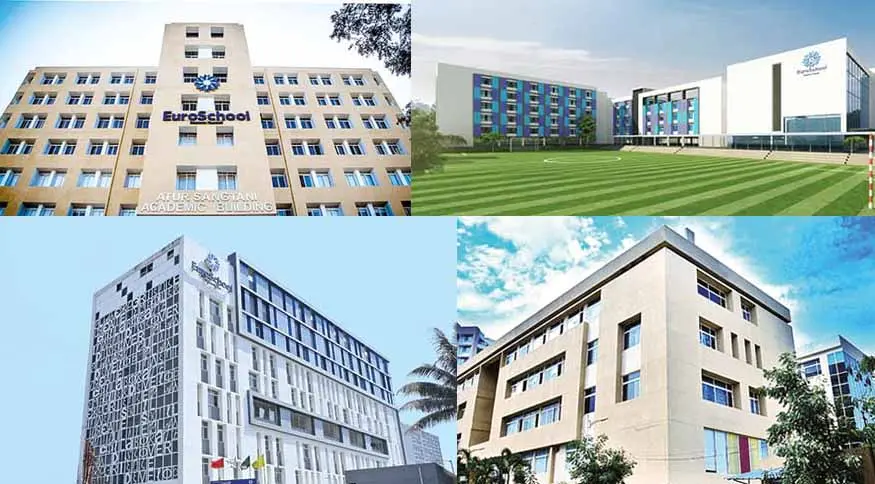
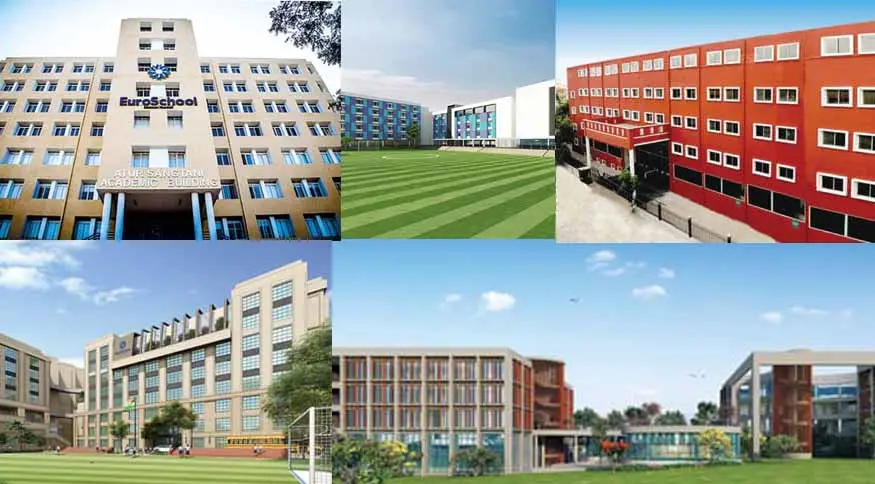
If you’re shortlisting schools and want an option that balances academics with child-centric learning, it’s worth understanding where EuroSchool sits—especially because many parents want a school that is academically strong, inquiry-driven, and globally aware without becoming exam-obsessed too early.
What EuroSchool says it focuses on (and what parents should validate on a visit)
EuroSchool positions its academic approach around:
- CBSE and ICSE affiliations (campus/region-dependent)
- alignment with NEP 2020 ideas
- a learning design described as the 7E Instruction Design Principle (Engage, Explain, Elaborate, Explore, Evaluate, Extend, Experience)
When you visit, ask the school to show you a real example of 7E in action:
- What does “Explore” look like in Grade 4 science?
- How do they “Evaluate” without over-testing?
- How is “Experience” built into projects, labs, sports, or arts?
The best sign of a strong pedagogy is whether it shows up consistently in everyday lessons, not just in brochures.
Location practicality (a real admissions factor)
EuroSchool has multiple city pages and location clusters (for example, EuroSchool’s Mumbai/Thane region pages highlight campuses in and around Thane).
Parent guidance: If you’re considering EuroSchool, compare:
- daily commute
- start times
- transport routes
- after-school activity schedule (so you don’t end up skipping enrichment due to logistics)
A well-run school experience depends as much on daily rhythm as on curriculum.
How to evaluate EuroSchool fairly (without “brand bias”)
Use the same scorecard you’d apply to any ICSE option:
- Observe literacy routines (reading/writing culture)
- Check how feedback is given
- Ask how they support different learners
- Understand assessment frequency and homework norms
- Look at student wellbeing supports
EuroSchool belongs in a shortlist if you see strong classroom practice, consistent learning design, and a calm, purposeful culture—not because of the name.
Conclusion: How to choose among ICSE Schools in India with confidence in 2026
The best way to choose among ICSE Schools in India is to stop chasing generic rankings and instead focus on what your child will live every day: teaching quality, feedback systems, literacy culture, conceptual learning, and wellbeing. Use the CISCE locator to verify affiliation, build a shortlist based on commute and fit, then visit with a clear parent scorecard.
If EuroSchool is on your list, evaluate it with the same lens: look for real evidence of inquiry-driven learning, consistent classroom quality, and an environment where academic ambition doesn’t come at the cost of childhood.
FAQs
1) How many ICSE schools in India?
There isn’t one universally accepted public number because counts vary by definition (ICSE-only vs ICSE+ISC, India-only vs including overseas). CISCE publicly notes over 2,600 affiliated schools in India and abroad, and its locator shows thousands of directory entries.
2) Is ICSE better than CBSE?
Neither is “better” universally. ICSE may suit families prioritising strong English expression and broad learning, while CBSE may suit families prioritising transfer ease and a widely standardised ecosystem. The best choice depends on the school’s quality and your child’s learning needs.
3) Is ICSE harder for students?
ICSE can feel harder if a school’s pace is fast or if a child needs support in writing and expression. In a child-centric school with good feedback systems, ICSE can feel structured rather than stressful.
4) Where can I find a reliable list of ICSE schools in India?
For verification, use the official CISCE school locator to confirm affiliation and board offering. It’s a reliable starting point for creating your own shortlist by city.
5) What should I check when comparing top ICSE schools in India?
Focus on classroom quality, literacy culture, conceptual maths/science, assessment style, wellbeing supports, and parent communication. Rankings often don’t measure these well.
6) Do ICSE schools help with competitive exam preparation?
Competitive readiness depends more on conceptual learning and problem-solving habits than on the board label. Ask schools how they build reasoning skills from middle school onward.
7) Can a child transfer from CBSE to ICSE smoothly?
Yes, if the school supports onboarding with bridge modules and writing support. Ask how they diagnose learning gaps and support transition without overloading the child.
8) How should I evaluate EuroSchool for ICSE?
Evaluate EuroSchool using the same parent scorecard you use for other schools: classroom observation, feedback quality, literacy routines, wellbeing supports, and daily logistics. EuroSchool describes a 7E learning design and CBSE/ICSE affiliations—validate how these show up in real classes.
Also Read: Top Schools in Pune
Also Read: International Schools in India